Top Private Companies in India: Sectors, Jobs & Business Growth
 admin
Private companies are a major part of India's economy and business landscape. They operate across almost every major industry, including technology, banking, automobiles, telecommunications, retail, manufacturing, pharmaceuticals, e-commerce, infrastructure and consumer goods.
Unlike public sector companies, private-sector businesses are primarily owned by private individuals, promoters, institutions or other private shareholders. Some are privately held, while others are listed companies whose shares are traded on stock exchanges but are not controlled by the government.
India's private sector is also becoming an increasingly important source of investment. Recent data shows that private investment and corporate capital expenditure have been gaining momentum, with businesses investing in areas such as manufacturing, infrastructure, AI and data centres.
What Is a Private Company in India?
A private company is a company incorporated under the Companies Act with restrictions on the transfer of its shares and on inviting the public to subscribe to its securities.
In everyday business usage, however, private companies in India can refer more broadly to businesses that are not government-owned or government-controlled.
This means a large listed company such as Reliance Industries or HDFC Bank can be considered part of India's private sector even though its shares are publicly traded.
Top Private Companies in India
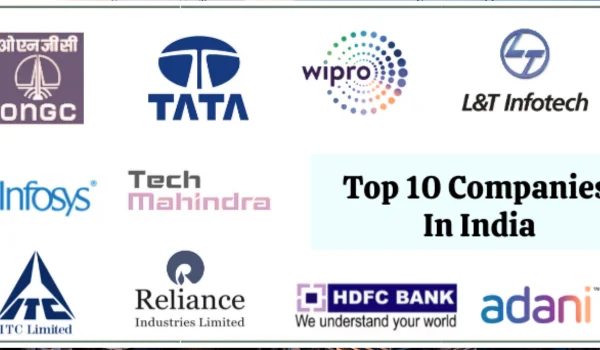
Some of India's major private-sector companies include:
| Company | Major Sector |
| Reliance Industries | Energy, Retail & Digital |
| Tata Consultancy Services | IT Services |
| HDFC Bank | Banking |
| ICICI Bank | Banking |
| Infosys | IT Services |
| Bharti Airtel | Telecommunications |
| Larsen & Toubro | Engineering & Infrastructure |
| Tata Motors | Automobiles |
| Tata Steel | Steel |
| ITC | FMCG & Tobacco |
| Wipro | IT Services |
| HCLTech | IT Services |
| Adani Enterprises | Infrastructure & Energy |
| Mahindra & Mahindra | Automobiles |
| Bajaj Finance | Financial Services |
| Asian Paints | Consumer Goods |
| Sun Pharmaceutical Industries | Pharmaceuticals |
| UltraTech Cement | Cement |
| Avenue Supermarts (DMart) | Retail |
| Flipkart | E-commerce |
The meaning of "top" can vary depending on whether companies are compared by revenue, market capitalisation, profit, assets or another measure. For example, Reliance Industries was India's largest company by revenue in the 2025 Fortune India 500, while HDFC Bank was among the leading private-sector companies.
Major Private Companies by Sector
- IT and Technology Companies
India has one of the world's largest IT services industries, with major private companies serving clients in India and overseas.
Important names include:
- TCS
- Infosys
- Wipro
- HCLTech
- Tech Mahindra
- LTIMindtree
- Persistent Systems
- Mphasis
These companies provide services such as software development, cloud computing, artificial intelligence, cybersecurity, consulting and digital transformation.
- Private Banking Companies
India's private banking sector includes some of the country's largest financial institutions.
Major private banks include:
- HDFC Bank
- ICICI Bank
- Axis Bank
- Kotak Mahindra Bank
- IndusInd Bank
- Federal Bank
- Yes Bank
Private banks provide retail banking, business loans, digital banking, investment products and other financial services.
- Automobile Companies
India has a large private-sector automobile industry.
Major companies include:
- Tata Motors
- Mahindra & Mahindra
- Bajaj Auto
- TVS Motor Company
- Eicher Motors
- Force Motors
- Ashok Leyland
These companies manufacture passenger vehicles, commercial vehicles, motorcycles, scooters and other mobility products.
- Telecommunications Companies
The Indian telecom industry has a strong private-sector presence.
Major companies include:
- Bharti Airtel
- Reliance Jio
- Vodafone Idea
Private telecom operators provide mobile communication, broadband, enterprise connectivity and digital services.
- FMCG and Consumer Companies
Private-sector companies are also prominent in India's consumer-goods market.
Examples include:
- ITC
- Asian Paints
- Britannia Industries
- Godrej Consumer Products
- Dabur India
- Marico
- Tata Consumer Products
They operate in areas such as food, beverages, personal care, home products and other consumer categories.
- Pharmaceutical Companies
India has a large private pharmaceutical industry with companies serving both domestic and international markets.
Major names include:
- Sun Pharmaceutical Industries
- Dr. Reddy's Laboratories
- Cipla
- Lupin
- Aurobindo Pharma
- Torrent Pharmaceuticals
- Zydus Lifesciences
Their businesses include generic medicines, specialty medicines, APIs, research and healthcare products.
- Infrastructure and Engineering Companies
Private companies have a major role in India's infrastructure development.
Important examples include:
- Larsen & Toubro
- Adani Enterprises
- Adani Ports
- Tata Projects
- JSW Infrastructure
- KEC International
These businesses work in construction, engineering, ports, roads, energy, logistics and other infrastructure areas.
- Retail and E-commerce Companies
India's expanding consumer market has created opportunities for both traditional retailers and digital businesses.
Major private companies include:
- Reliance Retail
- Avenue Supermarts (DMart)
- Flipkart
- Amazon India
- Meesho
- Nykaa
Some of these businesses are publicly listed while others remain privately held.
Private Companies in India by Ownership
Private-sector businesses can have different ownership structures.
Family-Owned Businesses
Many major Indian businesses began as family-owned enterprises.
Examples can include companies belonging to large business groups such as Tata, Aditya Birla, Mahindra and Godrej.
Founder-Led Companies
Many startups and newer businesses continue to be controlled by their founders and early investors.
Private Equity-Backed Companies
Private equity and institutional investors also own stakes in many Indian businesses.
Listed Private-Sector Companies
A company can be privately owned in the sense of being outside government control while still being listed on the stock market.
This distinction is important when discussing private companies in India.
Private Companies vs Public Sector Companies
| Feature | Private-Sector Company | Public-Sector Company |
| Ownership | Private individuals/institutions/shareholders | Government-controlled |
| Main objective | Primarily commercial | Commercial + strategic/public objectives |
| Decision-making | Company management | Government + management framework |
| Recruitment | Company-specific | Often structured |
| Investment | Private capital + markets | Government + markets/private investors |
| Examples | Reliance, TCS, HDFC Bank | ONGC, NTPC, Indian Oil |
A private-sector company should not be confused with a private limited company. A private-sector business may be a listed public company but still be privately owned rather than government controlled.
Major Cities for Private Companies in India
Private businesses have a strong presence in India's major commercial and industrial centres.
Mumbai
Mumbai is one of India's biggest centres for banking, finance, entertainment, FMCG, corporate headquarters and large business groups.
Bengaluru
Bengaluru is a major hub for IT companies, startups, technology development, AI and Global Capability Centres.
Delhi-NCR
Gurugram and Noida have large concentrations of technology, consulting, e-commerce, finance, retail and corporate businesses.
Hyderabad
Hyderabad has developed into a major centre for technology, pharmaceuticals, life sciences and corporate operations.
Chennai
Chennai is particularly important for automobiles, manufacturing, engineering and IT services.
Pune
Pune has a strong private-sector presence in IT, automobiles, engineering, manufacturing and professional services.
Private Company Jobs in India
Private companies employ people across almost every professional field.
Common positions include:
- Software Developer
- Data Analyst
- Business Analyst
- Accountant
- Financial Analyst
- Marketing Executive
- Sales Executive
- HR Manager
- Project Manager
- Mechanical Engineer
- Civil Engineer
- Operations Manager
- Supply Chain Manager
- Customer Support Executive
- Product Manager
Unlike many government organisations, private companies generally conduct their own recruitment processes.
Benefits of Working for a Private Company
Working for a private-sector company can provide:
- Faster career progression in some organisations
- Performance-based incentives
- Exposure to competitive business environments
- Opportunities to work with new technologies
- International client exposure
- Flexible roles in some companies
- Opportunities to change roles within the organisation
However, job security, salary, work culture and benefits vary considerably between companies.
Why Are Private Companies Important to India?
Private companies contribute significantly to India's economic growth.
Employment
Private businesses create jobs across technology, manufacturing, retail, finance, construction, healthcare and services.
Investment
Companies invest in factories, technology, infrastructure, research and new businesses.
Innovation
Startups and established companies contribute to new products, technologies and business models.
Infrastructure
Private businesses increasingly participate in roads, airports, ports, renewable energy, data centres and other infrastructure.
Exports
Indian private companies export software, pharmaceuticals, automobiles, engineering products, textiles and other goods and services.
Recent economic data indicates that private investment is becoming a stronger component of India's growth, with corporate investment increasing in areas including manufacturing, AI, railways and data centres.
Growing Private-Sector Opportunities in India
The Indian private sector is expanding beyond traditional industries. Some areas receiving significant business attention include:
- Artificial intelligence
- Data centres
- Renewable energy
- Electric vehicles
- Semiconductor manufacturing
- Digital payments
- E-commerce
- Healthcare technology
- Logistics
- Defence manufacturing
- Financial technology
The country's current investment cycle also includes growing private participation in infrastructure and emerging technologies.
Private Companies and the Indian Stock Market
Many large private-sector companies are listed on the NSE and BSE.
Examples include:
- Reliance Industries
- HDFC Bank
- ICICI Bank
- TCS
- Infosys
- Bharti Airtel
- Tata Motors
- Larsen & Toubro
- Asian Paints
- Sun Pharma
Being listed does not make a company government-owned. A listed company can remain part of the private sector if the government does not control it.
Private Companies vs MNCs
These two categories are also different.
An MNC is defined by its international operations, while a private-sector company is defined broadly by its ownership/control rather than whether it operates internationally.
For example:
- TCS — Indian private-sector company with global operations
- Infosys — Indian private-sector company with global operations
- Microsoft — foreign MNC operating in India
- Toyota — foreign MNC operating in India
Therefore, an Indian company can be both private-sector and multinational.
FAQs About Private Companies in India
What are private companies in India?
Private companies generally refer to businesses owned or controlled by private individuals, promoters, institutions or shareholders rather than the government.
Which are the top private companies in India?
Some major private-sector companies include Reliance Industries, TCS, HDFC Bank, ICICI Bank, Infosys, Bharti Airtel, Larsen & Toubro, Tata Motors, ITC and Mahindra & Mahindra.
Is Reliance a private company?
Reliance Industries is a private-sector company and a publicly listed company. It is not a government-owned enterprise.
Is TCS a private company?
TCS is an Indian private-sector company and a publicly listed subsidiary of the Tata Group. It is not a public-sector or government company.
What is the difference between a private company and a private-sector company?
A private company has a specific legal meaning under company law, while private-sector company is a broader term generally used for businesses outside government ownership or control.
Which private companies hire freshers?
Many private-sector companies hire fresh graduates in IT, banking, consulting, sales, finance, manufacturing, operations and customer service. Eligibility depends on the company and role.
Which sector has the most private companies in India?
Private businesses operate across almost every sector. IT services, financial services, manufacturing, retail, healthcare, automobiles, construction and consumer goods have particularly large private-sector ecosystems.
Final Thoughts
Private companies are one of the biggest drivers of India's modern business economy. They operate across technology, banking, automobiles, telecommunications, manufacturing, retail, pharmaceuticals, infrastructure and consumer goods.
From established business groups to fast-growing startups, India's private sector provides employment, investment, innovation and new business opportunities.
With private investment increasingly expanding into areas such as manufacturing, AI, renewable energy, infrastructure and digital services, private companies are likely to play an even larger role in India's economic growth in the coming years.