Types of Business Organizations in India: Forms, Features, Examples & Differences
 Jyoti Sirvastava
India has several types of business organizations that entrepreneurs can choose from depending on ownership, number of owners, liability, investment needs, business size and long-term goals.
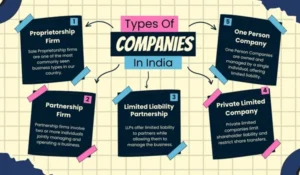
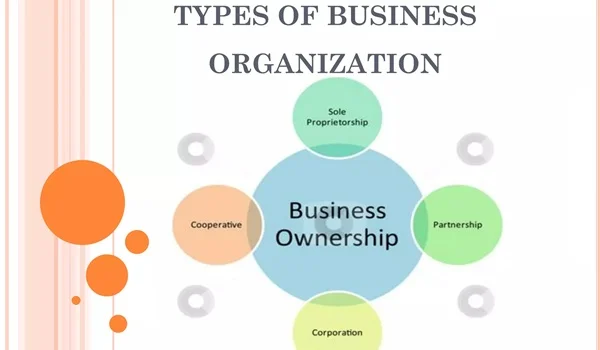
A business can operate as a sole proprietorship, partnership firm, Limited Liability Partnership (LLP), private limited company, public limited company, One Person Company (OPC), Section 8 company, cooperative organisation or other legally recognised structure.
Choosing the right structure is important because it affects liability, taxation, compliance, ownership, fundraising and how the business can grow.
Quick Information
| Business Organization | Owners/Members | Liability | Suitable For |
| Sole Proprietorship | One person | Unlimited | Small individual businesses |
| Partnership Firm | Two or more partners | Generally unlimited | Small and traditional businesses |
| LLP | Two or more partners | Limited | Professional and growing businesses |
| OPC | One member | Limited | Individual entrepreneurs |
| Private Limited Company | Two or more members, subject to law | Limited | Startups and growing businesses |
| Public Limited Company | Seven or more members | Limited | Large businesses |
| Section 8 Company | Members as permitted by law | Limited | Non-profit activities |
| Producer Company | Eligible producers | Limited | Farmers and producers |
| Cooperative Society | Members | Depends on applicable law | Mutual/member-based activities |
| Joint Venture | Two or more parties | Depends on structure | Collaborative projects |
What Is a Business Organization?
A business organization is the legal or organisational structure through which people conduct business activities.
It determines:
- Who owns the business
- Who manages it
- How profits are distributed
- Who bears business losses
- Whether owners have limited or unlimited liability
- How the business raises capital
- What registrations and compliance are required
In India, different business structures are governed by different laws. For example, companies are primarily governed by the Companies Act, 2013, while LLPs are governed by the Limited Liability Partnership Act, 2008. The Ministry of Corporate Affairs describes an LLP as a separate legal entity with limited liability for its partners.
- Sole Proprietorship
A sole proprietorship is one of the simplest forms of business organisation in India.
It is owned, managed and controlled by one individual. The business and the proprietor are not separate legal entities in the same way as a company or LLP. An MCA committee report also describes proprietorships as businesses owned, managed and controlled by one person, generally involving unlimited liability.
Features
- Single owner
- Easy to start
- Complete control with the owner
- Simple management
- Generally unlimited liability
- Business income is associated with the proprietor
Suitable For
- Small shops
- Freelancers
- Consultants
- Local service providers
- Small traders
- Home-based businesses
For a very small business, a proprietorship can be practical because the owner does not need to create a separate incorporated company.
- Partnership Firm
A partnership firm is formed when two or more people agree to carry on a business and share its profits.
Partnership businesses are governed primarily by the Indian Partnership Act, 1932.
Features
- Two or more partners
- Shared ownership
- Partners generally share profits and losses
- Partnership agreement defines many internal rights and responsibilities
- Relatively simple compared with a company
- Partners generally have unlimited liability
Suitable For
Partnership firms are commonly used for:
- Trading businesses
- Family businesses
- Small manufacturing units
- Professional practices
- Retail businesses
- Service businesses
A written partnership agreement is important because it can clearly establish capital contribution, profit sharing, responsibilities and other terms.
- Limited Liability Partnership (LLP)
A Limited Liability Partnership, or LLP, combines elements of a partnership with limited liability.
An LLP is a separate legal entity from its partners, and the liability of partners is generally limited to their agreed contribution, subject to the law. It must have at least two partners.
Features
- Separate legal entity
- Limited liability
- Minimum two partners
- Flexible internal structure
- Perpetual succession
- Suitable for professional and service businesses
Suitable For
- Consulting firms
- Law and professional practices
- Chartered accountant firms
- Technology businesses
- Small and medium enterprises
- Businesses with multiple founders
An LLP can be particularly useful when founders want partnership-style flexibility without the general unlimited liability associated with a traditional partnership.
- Private Limited Company
A Private Limited Company is one of the most popular structures for startups and growing businesses in India.
It has a separate legal identity from its shareholders and provides limited liability, subject to applicable law.
Features
- Separate legal entity
- Limited liability
- Closely held ownership
- Restrictions on transfer of shares
- Cannot invite the public to subscribe to its securities in the manner available to a public company
- Suitable for raising investment through equity
Suitable For
- Startups
- Technology companies
- E-commerce businesses
- Manufacturing businesses
- Businesses planning rapid expansion
- Companies seeking venture capital or private investment
A private limited company is often preferred by founders who expect their business to bring in investors or expand significantly.
- Public Limited Company
A Public Limited Company is a company that is not a private company.
The Companies Act provides for the formation of a public company by seven or more persons. A public company can be listed or unlisted.
Features
- Minimum seven members for formation
- Can have a large number of shareholders
- Can raise capital from investors subject to applicable laws
- Can be listed on a stock exchange
- Higher compliance requirements than many closely held structures
Suitable For
- Large businesses
- Companies requiring significant capital
- Businesses planning a public offering
- Established companies seeking access to public capital markets
Important: A public company is not automatically a listed company. A public company can remain unlisted.
- One Person Company (OPC)
A One Person Company, or OPC, allows one person to establish a company with a single member.
This structure provides an incorporated business format for an individual entrepreneur.
Features
- One member
- Separate legal entity
- Limited liability
- Corporate structure
- Nominee requirements under applicable law
Suitable For
- Individual entrepreneurs
- Consultants
- Professionals
- Small businesses with growth plans
- Entrepreneurs who want a company structure without multiple shareholders
An OPC can later become relevant for entrepreneurs who want to expand their ownership structure as their business grows.
- Section 8 Company
A Section 8 Company is established for specified non-profit objectives.
Its activities may include:
- Education
- Social welfare
- Charity
- Environmental protection
- Sports
- Research
- Art and culture
- Promotion of useful social or economic activities
Unlike an ordinary commercial company, its structure is intended for pursuing its stated objectives rather than distributing profits to members as dividends.
Suitable For
- Non-profit organisations
- Social initiatives
- Charitable activities
- Educational initiatives
- Community-development projects
- Producer Company
A Producer Company is designed around the interests of eligible producers.
It can be particularly useful for people involved in:
- Agriculture
- Dairy
- Fisheries
- Handloom
- Horticulture
- Food production
- Other primary production activities
The structure can help producer members collectively undertake activities such as procurement, processing, marketing and other services.
Why Producer Companies Matter
India has a large agricultural and rural economy, making collective business structures important for improving:
- Market access
- Bargaining power
- Processing
- Distribution
- Branding
- Access to business services
- Cooperative Society
A cooperative society is a member-based organisation created to serve the common economic or social interests of its members.
Cooperatives are different from ordinary shareholder-driven companies because their structure is based strongly on member participation and mutual benefit.
They can operate in areas such as:
- Agriculture
- Dairy
- Credit
- Housing
- Consumer goods
- Handicrafts
- Rural development
Examples of major cooperative organisations in India include Amul and IFFCO.
The exact registration and regulatory framework depends on whether the cooperative operates under a state cooperative law or the applicable multi-state framework.
- Joint Venture
A Joint Venture (JV) is a business arrangement in which two or more parties collaborate for a particular business activity or project.
A joint venture does not necessarily represent a separate legal form by itself. The parties may establish a company, LLP or another structure for the joint venture.
Examples of JV Arrangements
A joint venture may involve:
- An Indian company and a foreign company
- Two Indian companies
- A government entity and a private company
- Companies collaborating on a large infrastructure project
Suitable For
- Infrastructure
- Manufacturing
- Technology
- Energy
- Real estate
- International business expansion
Business Organizations Based on Liability
Another useful way to classify business organisations is according to the liability of owners.
| Structure | General Liability Position |
| Sole Proprietorship | Unlimited |
| Partnership Firm | Generally unlimited |
| LLP | Limited, subject to law |
| Private Limited Company | Limited |
| Public Limited Company | Limited |
| OPC | Limited |
| Section 8 Company | Generally limited |
| Cooperative Society | Depends on applicable law |
Limited liability means that the owner's personal financial exposure is generally separated from the entity's liabilities, subject to applicable law and exceptions such as fraud or personal guarantees.
Business Organizations Based on Number of Owners
The number of owners can also help determine the suitable structure.
One Owner
Common options include:
- Sole proprietorship
- OPC
Two or More Owners
Possible structures include:
- Partnership
- LLP
- Private limited company
- Joint venture
Large Ownership Base
A public company may be appropriate when a business needs a broader ownership structure and potentially wants access to public capital markets.
Business Organization vs Company
The terms business organization and company are not exactly the same.
A company is one type of business organisation.
For example:
- Sole proprietorship → Business organisation
- Partnership → Business organisation
- LLP → Business organisation
- Private limited company → Business organisation and company
- Public limited company → Business organisation and company
- OPC → Business organisation and company
- Cooperative → Business organisation
Therefore, all companies are business organisations, but all business organisations are not companies.
Business Organization vs Business Structure
These terms are often used interchangeably, but there is a useful distinction.
Business organisation generally refers to the legal or ownership form through which the business operates.
Business structure can be a broader term that includes:
- Legal form
- Ownership
- Management
- Group structure
- Subsidiaries
- Holding companies
- Joint ventures
For example, a large corporate group may have a parent company, multiple subsidiaries and several joint ventures.
Which Business Organization Is Best in India?
There is no single structure that is best for every business.
The right option depends on the business's requirements.
| Requirement | Structure to Consider |
| Very small individual business | Sole Proprietorship |
| Two or more small business owners | Partnership |
| Professional business with limited liability | LLP |
| Individual entrepreneur wanting corporate structure | OPC |
| Startup seeking investors | Private Limited Company |
| Large business | Public Limited Company |
| Social/non-profit activity | Section 8 Company |
| Farmer/producer-based organisation | Producer Company |
| Member-based mutual activity | Cooperative Society |
| Collaborative project | Joint Venture |
This table is a starting point, not a substitute for professional legal or tax advice.
Factors to Consider Before Choosing a Business Organization
Before selecting a structure, entrepreneurs should consider:
- Number of Owners
A single entrepreneur may consider a proprietorship or OPC, while multiple founders may consider a partnership, LLP or private company.
- Liability
If protecting personal assets from ordinary business liabilities is an important objective, an LLP or company structure may be considered.
- Investment
Startups planning to raise equity investment often prefer a private limited company.
- Compliance
Different structures have different registration, accounting, tax and annual-compliance requirements.
- Business Size
A small local business may not need the same structure as a company planning national or international expansion.
- Future Growth
Founders should consider whether they may later need:
- Investors
- Employees
- Multiple shareholders
- International operations
- Debt financing
- Stock-market listing
- Nature of Business
The appropriate structure may also depend on whether the business is:
- Commercial
- Professional
- Manufacturing
- Agricultural
- Non-profit
- Financial
- Technology-based
Registration and Business Approvals in India
The registration process depends on the selected business structure.
For incorporated entities such as companies and LLPs, the Ministry of Corporate Affairs (MCA) provides the relevant registration and filing framework. The National Portal of India also provides MCA information and forms for company and LLP-related services.
Businesses may also require other registrations or approvals depending on their activities.
These can include:
- PAN
- TAN
- GST registration
- Shops and Establishments registration
- Trade licence
- Professional tax registration where applicable
- FSSAI registration/licence for eligible food businesses
- Import Export Code for applicable import/export activities
- Factory-related approvals
- Sector-specific licences
The exact approvals depend on the business, location and industry. The National Single Window System (NSWS) provides a "Know Your Approvals" facility to help businesses identify relevant approvals.
Frequently Asked Questions
What are the main types of business organizations in India?
The main forms include sole proprietorship, partnership firm, LLP, private limited company, public limited company, OPC, Section 8 company, producer company, cooperative society and joint ventures.
Which business organisation is best for a small business?
A sole proprietorship, partnership or LLP may be considered depending on the number of owners, liability requirements and expected growth.
Which structure is best for startups?
A Private Limited Company is commonly preferred by startups that plan to raise equity investment and scale their business.
What is the difference between LLP and partnership?
An LLP is a separate legal entity with limited liability for its partners, while a traditional partnership generally does not provide the same limited-liability protection. The LLP framework also provides greater structural separation between the entity and its partners.
Is an LLP a company?
An LLP is a separate legal business entity, but it is governed by the Limited Liability Partnership Act, 2008, rather than being a company incorporated under the Companies Act.
Can one person start a business in India?
Yes. A person can operate as a sole proprietor or consider an One Person Company, depending on their requirements.
What is the difference between a company and a partnership?
A company is incorporated as a separate legal entity under company law, while a traditional partnership is governed by partnership law and is based on an agreement between partners.
Is a public company always listed?
No. A public company can be unlisted. Listing on a recognised stock exchange is a separate status.
Which business organisation has limited liability?
LLPs and companies generally provide limited liability to their owners or partners, subject to applicable law and exceptions.
What is a cooperative business organisation?
A cooperative is a member-based organisation created to promote the common economic or social interests of its members.
Final Thoughts
The types of business organizations in India range from simple structures such as sole proprietorships to more complex forms such as public companies and joint ventures.
The most commonly considered structures are:
- Sole Proprietorship for individual small businesses
- Partnership for businesses with multiple owners
- LLP for flexible businesses seeking limited liability
- Private Limited Company for startups and growing companies
- Public Limited Company for larger businesses
- OPC for individual entrepreneurs seeking a corporate structure
- Section 8 Company for non-profit objectives
- Producer Company for eligible producers
- Cooperative Society for member-based activities
The right choice depends on ownership, liability, investment, compliance, business activity and future growth plans. Entrepreneurs should evaluate these factors before registering their business and take professional legal, accounting or tax advice where necessary.