Public Sector Companies in India: Top PSUs, Sectors, Types, Jobs & List
 admin
Public sector companies are an important part of India's economy. These enterprises are owned or controlled by the Central Government or State Governments and operate in sectors such as oil and gas, power, banking, defence, mining, railways, engineering, infrastructure and telecommunications.
Some public sector companies are among India's largest businesses by revenue, assets and market presence. Companies such as ONGC, Indian Oil, NTPC, Coal India, Power Grid and Bharat Heavy Electricals have a major role in India's industrial and infrastructure development.
The Department of Public Enterprises (DPE) maintains official information on Central Public Sector Enterprises (CPSEs), including their classifications and schedules.
What Are Public Sector Companies?
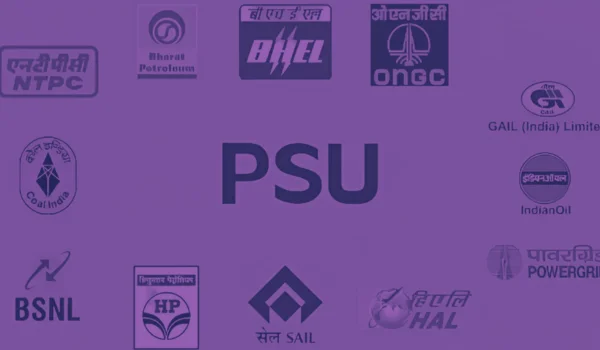
A public sector company is an enterprise in which the government has ownership or control. The government may own the company directly or through another government-controlled entity.
Public sector enterprises can broadly be divided into:
- Central Public Sector Enterprises (CPSEs)
- State Public Sector Enterprises (SPSEs)
CPSEs are enterprises where the Central Government has ownership or control, while state PSUs are controlled by individual state governments.
Public sector companies should not always be treated as exactly the same as "government companies" because the public sector includes different legal and organisational forms.
Top Public Sector Companies in India
Here are some of the major public sector companies in India:
| Public Sector Company | Major Sector |
| ONGC | Oil & Gas |
| Indian Oil Corporation | Oil & Gas |
| Bharat Petroleum Corporation | Oil & Gas |
| Hindustan Petroleum Corporation | Oil & Gas |
| GAIL | Natural Gas |
| NTPC | Power |
| Power Grid Corporation of India | Power Transmission |
| Coal India | Mining |
| Steel Authority of India | Steel |
| BHEL | Engineering & Power |
| Power Finance Corporation | Financial Services |
| REC Limited | Power Finance |
| Bharat Electronics | Defence Electronics |
| Hindustan Aeronautics | Aerospace & Defence |
| NMDC | Mining |
| NALCO | Metals & Mining |
| Rail Vikas Nigam | Rail Infrastructure |
| IRCON International | Infrastructure |
| RITES | Engineering & Consultancy |
| Cochin Shipyard | Shipbuilding |
The official DPE list classifies CPSEs into categories such as Maharatna, Navratna and Miniratna.
Public Sector Companies by Industry
Public sector companies are present across a wide range of industries.
Oil and Gas Companies
The energy sector contains some of India's biggest public-sector enterprises.
Major companies include:
- ONGC
- Indian Oil Corporation
- Bharat Petroleum
- Hindustan Petroleum
- GAIL
- Oil India
- Chennai Petroleum
- Mangalore Refinery & Petrochemicals
These companies are involved in oil exploration, production, refining, natural gas, pipelines and fuel marketing.
Power Sector Companies
Government-owned enterprises play a major role in India's electricity ecosystem.
Major companies include:
- NTPC
- Power Grid Corporation
- NHPC
- SJVN
- NLC India
- Power Finance Corporation
- REC Limited
Their activities cover power generation, electricity transmission, renewable energy and financing.
Banking and Financial Companies
Public-sector banking is another major part of India's financial system.
Important public-sector banks include:
- State Bank of India
- Punjab National Bank
- Bank of Baroda
- Canara Bank
- Union Bank of India
- Bank of India
- Indian Bank
- Central Bank of India
- Bank of Maharashtra
- UCO Bank
- Punjab & Sind Bank
These banks serve individuals, businesses, farmers and government-related programmes.
Defence and Aerospace Companies
India has several important public-sector defence enterprises.
Major examples include:
- Hindustan Aeronautics Limited (HAL)
- Bharat Electronics Limited (BEL)
- Bharat Dynamics Limited (BDL)
- Mazagon Dock Shipbuilders
- Garden Reach Shipbuilders & Engineers
- Cochin Shipyard
These organisations manufacture or support aircraft, defence electronics, missiles, naval vessels and other strategic equipment.
India's defence PSUs are also becoming increasingly important to the country's export and self-reliance goals. India's 16 Defence Public Sector Undertakings recorded their highest-ever combined production in FY2025-26, according to recent government-related reporting.
Mining Companies
Public-sector enterprises have a major presence in India's mining industry.
Some prominent names include:
- Coal India
- NMDC
- NALCO
- Hindustan Copper
- MOIL
- Mahanadi Coalfields
- Northern Coalfields
- South Eastern Coalfields
Coal and mineral companies supply raw materials to the power, steel, construction and manufacturing industries.
Railway and Infrastructure Companies
Several public-sector companies support India's railway and infrastructure network.
Important examples include:
- Rail Vikas Nigam Limited
- IRCON International
- RITES
- Indian Railway Finance Corporation
- RailTel
- Container Corporation of India
- IRCTC
Their activities include railway construction, infrastructure development, financing, telecommunications, logistics and tourism services.
Engineering and Manufacturing Companies
Public-sector companies also operate in heavy engineering and industrial manufacturing.
Examples include:
- BHEL
- Bharat Electronics
- Engineers India
- HAL
- HMT
- Richardson & Cruddas
- Heavy Engineering Corporation
The Ministry of Heavy Industries administers several CPSEs involved in heavy engineering, electrical engineering, automotive and related industries.
Maharatna Public Sector Companies
Maharatna is the highest category of Central Public Sector Enterprises. Companies meeting government criteria can receive greater financial and operational autonomy.
The DPE's published list includes Maharatna CPSEs such as:
- BHEL
- BPCL
- Coal India
- GAIL
- HPCL
- Indian Oil
- NTPC
- ONGC
- Power Finance Corporation
- Power Grid Corporation
- SAIL
- REC
- Oil India
The classification is based on government rules and can change as new companies receive upgraded status.
Navratna Public Sector Companies
Navratna companies are high-performing CPSEs that receive greater autonomy than other eligible public-sector enterprises.
Examples from the DPE classification include:
- Bharat Electronics
- Container Corporation of India
- Engineers India
- Hindustan Aeronautics
- National Aluminium Company
- NMDC
- Rail Vikas Nigam
- IRCON
- RITES
- Rashtriya Chemicals & Fertilizers
- Shipping Corporation of India
- National Buildings Construction Corporation
The official classification provides the most reliable reference because categories can change over time.
Miniratna Public Sector Companies
Miniratna CPSEs are divided into Category-I and Category-II.
Some well-known organisations appearing in the government's Miniratna lists include:
- Airports Authority of India
- Bharat Dynamics
- BEML
- Bharat Sanchar Nigam
- Cochin Shipyard
- Garden Reach Shipbuilders & Engineers
- Hindustan Copper
- Housing & Urban Development Corporation
- IRCTC
- Indian Railway Finance Corporation
- Indian Renewable Energy Development Agency
The Miniratna classification is based on prescribed financial and performance conditions.
Central vs State Public Sector Companies
Public sector companies can be broadly separated according to the level of government that owns or controls them.
Central Public Sector Companies
These are associated with the Government of India.
Examples include:
- ONGC
- NTPC
- Indian Oil
- Coal India
- BHEL
- Power Grid
- HAL
- BEL
State Public Sector Companies
State governments also establish companies and corporations for sectors important to their individual states.
They may operate in:
- Electricity
- Transport
- Mining
- Tourism
- Infrastructure
- Housing
- Industrial development
- Finance
- Water supply
Therefore, the total number of public-sector companies in India is much larger than the list of Central PSUs alone.
Public Sector Companies and Employment
Public-sector companies are important employers for graduates, engineers, management professionals and skilled workers.
Common positions include:
- Engineer
- Management Trainee
- Finance Officer
- HR Officer
- Operations Manager
- Technician
- Executive
- IT Professional
- Legal Officer
- Safety Officer
- Apprentice
How Do PSUs Recruit Employees?
Recruitment methods vary from one organisation to another.
Common routes include:
- GATE-based recruitment
- UPSC examinations
- Company-specific examinations
- Banking examinations
- Management trainee programmes
- Graduate trainee programmes
- Apprenticeships
- Specialist recruitment
Candidates should always check the individual company's official recruitment notification for eligibility, age limit, selection process and salary.
Popular Public Sector Companies for Jobs
Some of the most sought-after public-sector employers include:
- ONGC
- NTPC
- Indian Oil
- GAIL
- Power Grid
- BHEL
- Coal India
- HAL
- BEL
- SAIL
- BPCL
- HPCL
- NHPC
- SBI
The best option depends on a candidate's educational background and career goals.
Public Sector Companies vs Private Companies
| Feature | Public Sector Company | Private Company |
| Ownership | Government-controlled | Private shareholders |
| Main focus | Commercial + strategic/public objectives | Primarily commercial |
| Recruitment | Often structured | Company-specific |
| Job security | Generally considered relatively strong | Depends on company |
| Career growth | Often structured | Can be faster in some companies |
| Work culture | Varies | Varies |
| Decision-making | Government and management framework | Company management |
| International exposure | Depends on organisation | Depends on company |
Neither type is automatically better. The right choice depends on the industry, job role, career objectives and individual preferences.
Role of Public Sector Companies in India's Economy
Public sector companies have historically played a major role in India's economic development.
Infrastructure Development
PSUs contribute to power plants, railways, energy infrastructure, defence facilities and other large projects.
Energy Security
Oil, gas, coal and power companies support India's energy requirements.
Defence and Strategic Industries
Public-sector defence companies manufacture aircraft, ships, missiles, electronics and other strategic products.
Employment
PSUs provide direct employment and generate additional opportunities through suppliers, contractors and service providers.
Industrial Development
Large public enterprises create demand for engineering equipment, raw materials, logistics and other industrial services.
Government Revenue
Profitable public-sector companies can contribute to government finances through dividends, taxes and other payments.
Recent data also shows continued investment by CPSEs. The Department of Public Enterprises reported substantial capital expenditure by CPSEs, highlighting their continuing role in infrastructure and economic activity.
Are Public Sector Companies Listed on the Stock Market?
Yes. Several public-sector companies are listed on Indian stock exchanges.
Examples include:
- ONGC
- NTPC
- Coal India
- Indian Oil
- Power Grid
- BHEL
- Bharat Electronics
- HAL
- GAIL
- SAIL
A listed public-sector company can have private and institutional shareholders while the government continues to hold a controlling stake.
FAQs About Public Sector Companies in India
What are public sector companies in India?
Public sector companies are enterprises owned or controlled by the Central Government or State Governments. They operate across sectors such as energy, banking, defence, mining, power and infrastructure.
What is the difference between PSU and public sector company?
PSU is a commonly used term for public-sector enterprises. A public-sector company can refer specifically to a company with government ownership or control. The terms are often used interchangeably in everyday business discussions, although their legal meanings can differ.
Which are the biggest public sector companies in India?
ONGC, Indian Oil, NTPC, Coal India, Power Grid, BHEL, SAIL and other large government enterprises are among the country's major public-sector businesses.
What are Maharatna companies?
Maharatna is a government classification for eligible high-performing Central Public Sector Enterprises. These companies receive greater financial and operational autonomy.
Are public sector companies government-owned?
Yes, public-sector companies have government ownership or control, although the exact ownership structure varies between organisations.
Do public sector companies hire freshers?
Yes. Many public-sector organisations recruit fresh graduates, engineers, apprentices and management trainees. Recruitment methods and eligibility differ by company.
Can I buy shares of public sector companies?
Yes, shares of listed public-sector companies can generally be bought and sold through the stock market. Investors should evaluate each company independently before making an investment decision.
Final Thoughts
Public sector companies are an important part of India's corporate and economic landscape. Their presence extends across oil and gas, power, banking, mining, defence, railways, engineering, manufacturing and infrastructure.
For job seekers, these companies provide opportunities across technical, managerial, financial and operational fields. For the wider economy, they support infrastructure development, strategic industries, employment, manufacturing and supply chains.
With India continuing to invest in energy, defence, railways, manufacturing and infrastructure, public sector companies are likely to remain important contributors to the country's economic development.