Maharatna Companies in India: List of 14 Maharatna CPSEs, Sectors, Jobs & Benefits
 Jyoti Sirvastava
Maharatna companies are among the largest and most strategically important Central Public Sector Enterprises (CPSEs) in India. The Government of India created the Maharatna scheme to give large-performing CPSEs greater financial and administrative freedom so they can expand their operations and compete globally.
As of 2026, India has 14 Maharatna CPSEs. They operate in important sectors such as oil and gas, power, coal, petroleum, steel, heavy engineering, defence and financial services. The latest company to receive Maharatna status was Hindustan Aeronautics Limited (HAL) in October 2024.
What Is a Maharatna Company?
A Maharatna company is a high-performing Central Public Sector Enterprise that has been granted Maharatna status by the Government of India.
The status provides greater autonomy to eligible CPSEs, particularly in areas such as:
- Capital expenditure
- Investments
- Joint ventures
- Subsidiaries
- Mergers and acquisitions
- Human resource management
- Business expansion
The main objective of the Maharatna scheme is to help large CPSEs expand their operations and develop into global-scale enterprises. The scheme was introduced in 2010.
List of Maharatna Companies in India
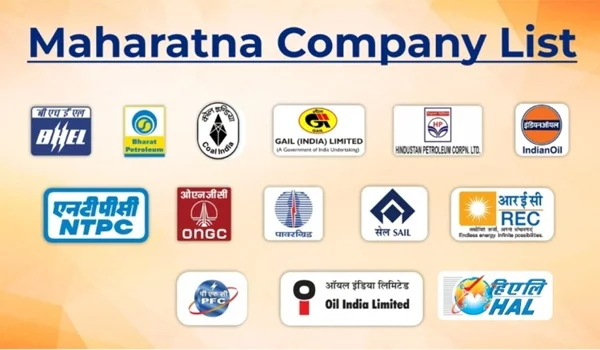
The current list contains 14 Maharatna CPSEs:
| No. | Maharatna Company | Major Sector |
| 1 | Bharat Heavy Electricals Limited (BHEL) | Heavy Engineering & Power Equipment |
| 2 | Bharat Petroleum Corporation Limited (BPCL) | Oil & Gas |
| 3 | Coal India Limited (CIL) | Coal & Mining |
| 4 | GAIL (India) Limited | Natural Gas |
| 5 | Hindustan Aeronautics Limited (HAL) | Aerospace & Defence |
| 6 | Hindustan Petroleum Corporation Limited (HPCL) | Oil & Gas |
| 7 | Indian Oil Corporation Limited (IOCL) | Oil & Gas |
| 8 | NTPC Limited | Power |
| 9 | Oil and Natural Gas Corporation Limited (ONGC) | Oil & Gas |
| 10 | Power Finance Corporation Limited (PFC) | Power Finance |
| 11 | Power Grid Corporation of India Limited | Power Transmission |
| 12 | Rural Electrification Corporation Limited (REC) | Power Finance |
| 13 | Steel Authority of India Limited (SAIL) | Steel |
| 14 | Oil India Limited (OIL) | Oil & Gas |
The Department of Public Enterprises (DPE) maintains the official Ratna-category classification of CPSEs.
- Bharat Heavy Electricals Limited (BHEL)
BHEL is one of India's major engineering and manufacturing CPSEs. It is involved in the design, engineering, manufacturing and servicing of equipment for the power and industrial sectors.
Its activities include:
- Power equipment
- Heavy electrical machinery
- Industrial systems
- Renewable-energy-related equipment
- Engineering services
BHEL is particularly important to India's power and industrial infrastructure.
- Bharat Petroleum Corporation Limited (BPCL)
BPCL is a major government-controlled energy company operating across the petroleum value chain.
Its activities include:
- Refining
- Petroleum marketing
- Fuel distribution
- Aviation fuel
- Lubricants
- Gas and energy-related businesses
BPCL has a large network of fuel stations and other petroleum infrastructure across India.
- Coal India Limited (CIL)
Coal India Limited is one of India's most important coal-producing enterprises.
It operates through several subsidiary companies and supplies coal to industries including:
- Power generation
- Steel
- Cement
- Other industrial sectors
Coal India plays an important role in India's energy and mining ecosystem.
- GAIL (India) Limited
GAIL is India's major natural-gas transmission and marketing company.
Its business activities include:
- Natural gas transmission
- Gas marketing
- Petrochemicals
- City gas-related activities
- Gas infrastructure
GAIL's pipeline network connects important gas-producing and consuming regions.
- Hindustan Aeronautics Limited (HAL)
Hindustan Aeronautics Limited is India's major aerospace and defence manufacturing company.
HAL works in areas such as:
- Aircraft manufacturing
- Helicopters
- Aircraft engines
- Aerospace systems
- Defence equipment
- Aircraft maintenance and upgrades
HAL received Maharatna status in October 2024 and became the 14th Maharatna CPSE.
- Hindustan Petroleum Corporation Limited (HPCL)
HPCL operates in India's petroleum and energy sector.
Its activities include:
- Oil refining
- Fuel marketing
- Lubricants
- Petroleum distribution
- LPG
- Aviation fuel
The company operates a large network of retail outlets and petroleum infrastructure.
- Indian Oil Corporation Limited (IOCL)
Indian Oil Corporation, commonly known as IndianOil, is one of India's largest integrated energy companies.
Its operations cover:
- Refining
- Petroleum products
- Fuel retailing
- Pipelines
- Petrochemicals
- Natural gas
- Alternative energy
Its extensive network makes it an important part of India's energy infrastructure.
- NTPC Limited
NTPC is one of India's leading power-generation companies.
It has traditionally been strongly associated with thermal power, while also expanding into areas such as:
- Renewable energy
- Solar power
- Wind energy
- Green hydrogen
- Energy transition projects
NTPC is important for India's electricity-generation capacity and energy security.
- Oil and Natural Gas Corporation Limited (ONGC)
ONGC is one of India's major exploration and production companies.
Its core activities include:
- Oil exploration
- Natural gas exploration
- Hydrocarbon production
- Offshore operations
- Energy-related businesses
ONGC plays an important role in India's domestic energy supply.
- Power Finance Corporation Limited (PFC)
Power Finance Corporation is a major financial institution focused on India's power sector.
It provides financing and related financial support for projects involving areas such as:
- Power generation
- Transmission
- Distribution
- Renewable energy
- Power-sector infrastructure
PFC helps finance the development of India's electricity ecosystem.
- Power Grid Corporation of India Limited
Power Grid Corporation of India Limited, commonly known as POWERGRID, is India's major power-transmission enterprise.
Its activities include:
- Electricity transmission
- Grid management infrastructure
- Transmission projects
- Telecom infrastructure
- Consultancy services
POWERGRID is important for transferring electricity from generating stations to consumption centres.
- Rural Electrification Corporation Limited (REC)
REC Limited is a government-owned financial institution focused on India's power sector.
It provides finance for projects involving:
- Power generation
- Transmission
- Distribution
- Renewable energy
- Rural and infrastructure development
REC works closely with various stakeholders in the power sector.
- Steel Authority of India Limited (SAIL)
SAIL is one of India's major steel producers.
Its operations include production of:
- Flat steel products
- Long steel products
- Special steels
- Other industrial steel products
Its steel plants support sectors such as construction, engineering, automobiles, infrastructure and manufacturing.
- Oil India Limited (OIL)
Oil India Limited is an integrated energy company involved primarily in exploration and production of crude oil and natural gas.
Its operations include:
- Oil exploration
- Natural gas exploration
- Hydrocarbon production
- Pipeline operations
- Energy-related projects
Oil India is an important participant in India's upstream energy sector.
Maharatna Companies by Sector
The 14 Maharatna CPSEs are concentrated in strategically important sectors.
Oil, Gas and Petroleum
This is the largest group within the Maharatna category.
Major companies include:
- ONGC
- Indian Oil
- BPCL
- HPCL
- GAIL
- Oil India
These companies operate across exploration, refining, fuel marketing, gas transportation and energy distribution.
Power and Electricity
Power is another major area.
Key Maharatna companies include:
- NTPC
- Power Grid
- PFC
- REC
Together, they cover power generation, transmission and power-sector financing.
Mining and Coal
Coal India is the major Maharatna company in this category.
Its operations are closely connected with India's electricity-generation and industrial sectors.
Steel
SAIL represents the steel sector within the Maharatna group.
Heavy Engineering
BHEL represents India's large-scale power and heavy-engineering manufacturing capabilities.
Aerospace and Defence
HAL represents the aerospace and defence manufacturing sector and became the newest Maharatna CPSE in 2024.
What Are the Benefits of Maharatna Status?
Maharatna status provides greater autonomy to eligible CPSEs.
Greater Financial Autonomy
Maharatna boards receive enhanced powers to approve certain investments and capital-expenditure decisions within the limits prescribed by government policy.
Business Expansion
Greater autonomy can help companies expand into new markets, technologies and business areas.
Joint Ventures and Subsidiaries
Maharatna companies have greater flexibility in establishing joint ventures and subsidiaries, subject to applicable rules.
Mergers and Acquisitions
They receive greater decision-making powers in specified investment and corporate transactions.
Global Expansion
One of the main objectives of the scheme is to help large Indian CPSEs become globally competitive companies.
Maharatna vs Navratna vs Miniratna
India's CPSEs are placed into different autonomy categories.
| Category | General Position | Level of Autonomy |
| Maharatna | Largest and high-performing CPSEs | Highest |
| Navratna | Strong-performing CPSEs | High |
| Miniratna-I | Eligible profitable CPSEs | Moderate |
| Miniratna-II | Eligible CPSEs meeting prescribed criteria | More limited |
The classification is designed to give successful CPSEs increasing levels of managerial and financial autonomy.
The number of Maharatna CPSEs has grown substantially over the years. A government publication noted that the number increased from 7 in 2014 to 14 in 2025, reflecting the expansion of the scheme.
Maharatna Companies and Stock Market
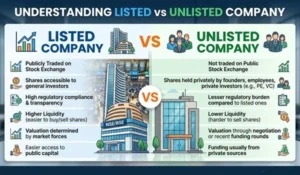
Several Maharatna companies are also listed on Indian stock exchanges.
Examples include:
- BHEL
- BPCL
- Coal India
- GAIL
- HAL
- HPCL
- Indian Oil
- NTPC
- ONGC
- PFC
- Power Grid
- REC
- SAIL
- Oil India
However, Maharatna status and stock-market listing are two different concepts.
Maharatna is a government classification based on the status and performance of a CPSE, while listing refers to securities being listed on a recognised stock exchange.
Jobs in Maharatna Companies
Maharatna companies are major employers in India and offer opportunities across technical, managerial and administrative fields.
Common job areas include:
- Engineering
- Finance and accounting
- Human resources
- Information technology
- Operations
- Marketing
- Legal services
- Procurement
- Project management
- Research and development
- Safety and quality
Recruitment may take place through company-specific recruitment, examinations, interviews, graduate-engineer routes, apprenticeships and other approved methods.
For engineering graduates, Maharatna CPSEs can be particularly important employers because many operate large plants, power stations, mines, refineries, transmission projects and manufacturing facilities.
Why Are Maharatna Companies Important to India?
Maharatna CPSEs operate in sectors that are essential to the Indian economy.
Their importance can be seen in:
Energy Security
Companies such as ONGC, Indian Oil, BPCL, HPCL, GAIL and Oil India support India's energy infrastructure.
Power Infrastructure
NTPC, Power Grid, PFC and REC contribute to power generation, transmission and financing.
Industrial Development
BHEL and SAIL support India's engineering, manufacturing and infrastructure sectors.
Defence and Aerospace
HAL contributes to India's domestic aerospace and defence capabilities.
Employment
Large CPSEs create direct employment and support extensive networks of contractors, suppliers and service providers.
Government Revenue
Profitable CPSEs can contribute through taxes, dividends and other payments to the government.
The Department of Public Enterprises tracks financial performance, employment, investment, turnover and other indicators across CPSEs through its Public Enterprises Survey.
How Does a Company Get Maharatna Status?
Maharatna status is not given simply because a company is large.
A CPSE has to satisfy government-prescribed eligibility conditions relating to factors such as:
- Navratna status
- Stock-exchange listing
- Financial performance
- Size and scale
- International operations
- Strategic or commercial performance
The company is evaluated under the applicable government framework before Maharatna status is granted.
The status can therefore be viewed as recognition of a CPSE's scale, financial strength and strategic importance.
Frequently Asked Questions
How many Maharatna companies are there in India?
There are currently 14 Maharatna CPSEs. HAL became the 14th company to receive this status in October 2024.
Which is the latest Maharatna company in India?
Hindustan Aeronautics Limited (HAL) is the latest company to receive Maharatna status. It was granted the status in October 2024.
Which is the biggest Maharatna company in India?
There is no single answer because "biggest" can refer to revenue, market capitalisation, assets, profit or other measures. Companies such as Indian Oil, ONGC, Coal India, NTPC and other Maharatna CPSEs are among India's largest government-controlled enterprises.
Are Maharatna companies government companies?
Yes. Maharatna status is a classification under the Central Public Sector Enterprise framework. The companies are central government-controlled CPSEs.
Are all Maharatna companies listed on the stock market?
Many Maharatna CPSEs are listed, but Maharatna status itself is not the same as stock-market listing.
Which Maharatna companies offer government jobs?
Maharatna CPSEs regularly recruit for technical, managerial, administrative and other positions. However, recruitment rules and vacancies vary from company to company.
Which is better, Maharatna or Navratna?
Maharatna is the higher autonomy category. Maharatna CPSEs generally have greater financial and managerial powers than Navratna CPSEs under the government framework.
Final Thoughts
Maharatna companies are the highest autonomy category among India's Ratna-classified CPSEs. The 14 companies operate across critical sectors including energy, power, coal, steel, heavy engineering, finance and defence.
Companies such as Indian Oil, ONGC, NTPC, Coal India, Power Grid, BHEL and HAL are not only major government enterprises but also important parts of India's industrial and economic infrastructure.
For job seekers, investors and business researchers, Maharatna companies are worth studying because they combine large-scale operations, strategic importance, substantial employment and significant participation in India's core industries.