FMCG Companies in India: Top FMCG Companies, Brands, Products & Industry Overview (2026)
 Jyoti Sirvastava
Fast-Moving Consumer Goods, commonly known as FMCG, are products that consumers purchase frequently and use in their everyday lives. The category includes food and beverages, personal-care products, household products, packaged foods, oral care, home cleaning products and many other consumer essentials.
India has one of the world's largest consumer markets, making the FMCG industry an important part of the country's economy. The sector includes large Indian companies, multinational corporations, regional manufacturers and fast-growing direct-to-consumer brands.
Some of the most recognised FMCG companies operating in India include Hindustan Unilever, ITC, Nestlé India, Britannia Industries, Tata Consumer Products, Dabur India, Marico, Godrej Consumer Products, Colgate-Palmolive India and Patanjali Foods.
The Indian FMCG market is also changing rapidly because of premiumisation, rural consumption, e-commerce, quick commerce, digital marketing and changing consumer preferences.
What Is FMCG?
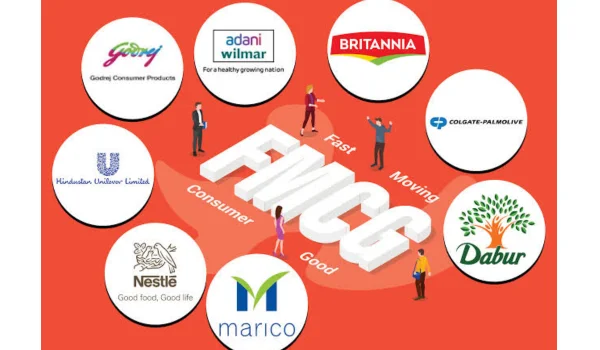
FMCG stands for Fast-Moving Consumer Goods.
These are generally products that:
- Are purchased frequently
- Have relatively short consumption cycles
- Are sold through large distribution networks
- Usually have comparatively low individual selling prices
- Require strong brand recognition
- Generate repeat purchases
Examples include:
- Biscuits
- Packaged foods
- Tea and coffee
- Edible oils
- Personal-care products
- Toothpaste
- Shampoo
- Soap
- Detergents
- Household cleaners
- Packaged beverages
- Snacks
- Confectionery
Top FMCG Companies in India
The following companies are among the most prominent FMCG businesses in India. This is an editorial industry list, not an official government ranking. Companies have been considered based on brand presence, scale, product portfolio, distribution reach, market position and overall importance to India's FMCG sector.
Hindustan Unilever Limited
Hindustan Unilever, commonly known as HUL, is one of India's largest and most recognised FMCG companies.
The company has a broad portfolio covering beauty and personal care, home care, foods and refreshments.
Its well-known brands include:
- Dove
- Lux
- Lifebuoy
- Surf Excel
- Rin
- Vim
- Clinic Plus
- Sunsilk
- Horlicks
- Brooke Bond
- Kwality Wall's
HUL has one of the country's largest FMCG distribution networks and serves consumers across urban as well as rural markets.
Its scale, extensive brand portfolio and distribution infrastructure make it one of the most influential FMCG companies in India.
ITC Limited
ITC is a diversified Indian conglomerate with significant FMCG operations.
Its FMCG business includes packaged foods, biscuits, snacks, noodles, dairy products, beverages, personal care and other consumer products.
Important brands include:
- Aashirvaad
- Sunfeast
- Bingo!
- YiPPee!
- Classmate
- Fiama
- Vivel
- Savlon
ITC's large distribution network and strong brand portfolio have helped it become one of India's leading consumer-goods businesses.
Its FMCG operations also benefit from the company's presence in agriculture, hotels, paperboards, packaging and other businesses.
Nestlé India
Nestlé India is the Indian subsidiary of Swiss multinational Nestlé and is one of India's best-known food and beverage companies.
The company's products are present across several everyday consumption categories.
Major brands include:
- Maggi
- Nescafé
- KitKat
- Milkmaid
- Cerelac
- EveryDay
- Nestea
- Nestlé Munch
Nestlé has a particularly strong position in packaged foods, instant noodles, coffee, confectionery, nutrition and dairy-related products.
The company has also expanded its portfolio to address changing Indian consumer preferences.
Britannia Industries
Britannia Industries is one of India's leading packaged-food companies.
The company is particularly well known for biscuits, but its portfolio also includes breads, cakes, dairy products and other food categories.
Major brands include:
- Good Day
- Marie Gold
- Tiger
- Bourbon
- NutriChoice
- Milk Bikis
- 50-50
Britannia has a strong presence across Indian retail markets.
The company also has significant brand recognition in both urban and smaller markets.
Recent industry data continues to show strong consumer demand for Britannia's products, although the company, like other food manufacturers, faces fluctuations in commodity and packaging costs.
Tata Consumer Products
Tata Consumer Products is part of the Tata Group and operates across beverages and food products.
Its portfolio includes:
- Tea
- Coffee
- Salt
- Packaged foods
- Ready-to-cook products
- Other consumer staples
Important brands include:
- Tata Tea
- Tetley
- Tata Salt
- Tata Sampann
- Himalayan
- Eight O'Clock Coffee
Tata Consumer Products has expanded its presence in modern retail, e-commerce and premium consumer categories.
Its association with the Tata brand also provides strong consumer recognition.
Dabur India
Dabur India is one of India's major consumer-goods companies with a strong heritage in healthcare, personal care, food and beverages.
The company's portfolio includes:
- Dabur Chyawanprash
- Dabur Honey
- Real
- Vatika
- Hajmola
- Odomos
- Lal Tail
Dabur has particularly strong positioning in Ayurveda-inspired consumer products and natural personal-care categories.
The company has also expanded internationally and sells products in multiple overseas markets.
Marico Limited
Marico is an Indian FMCG company focused primarily on beauty, wellness and food products.
Its major brands include:
- Parachute
- Saffola
- Hair & Care
- Livon
- Set Wet
- Nihar
The company's products are sold across India and several international markets.
Marico has built strong positions in edible oils, hair care, male grooming and wellness-oriented products.
Its Saffola brand has also benefited from growing consumer interest in health and nutrition.
Godrej Consumer Products
Godrej Consumer Products, or GCPL, is part of the Godrej Group and operates across home care, personal care and related consumer categories.
Its brands include:
- Goodknight
- HIT
- Cinthol
- Godrej Expert
- Ezee
- Aer
The company has a significant presence in household insecticides, personal wash, hair colour and home-care products.
GCPL also has operations in international markets, making it an important Indian multinational FMCG business.
Colgate-Palmolive India
Colgate-Palmolive India is a major oral-care company and the Indian subsidiary of global consumer-products company Colgate-Palmolive.
Its core business is oral care.
Major products include:
- Toothpaste
- Toothbrushes
- Mouthwash
- Oral hygiene products
The Colgate brand has exceptionally high recognition among Indian consumers.
The company has maintained a strong position in India's toothpaste and oral-care market through extensive distribution and advertising.
Patanjali Foods
Patanjali Foods is an important Indian consumer-goods company with operations across food, edible oils, nutrition and other consumer categories.
Its portfolio includes:
- Edible oils
- Food products
- Nutraceuticals
- Personal-care-related products
- Packaged consumer goods
The company benefits from the wider Patanjali brand ecosystem and has expanded its presence across India's consumer market.
Other Major FMCG Companies in India
India's FMCG sector includes many additional companies.
Important names include:
- Procter & Gamble
- PepsiCo India
- Coca-Cola India
- Reckitt
- Mondelez India
- Amul
- Parle Products
- Emami
- Jyothy Labs
- Tata Consumer Products
- Varun Beverages
- United Spirits
- Zydus Wellness
- Bikaji Foods
- LT Foods
- AWL Agri Business
- Radico Khaitan
- United Breweries
These companies operate in different segments, and not all are pure-play FMCG businesses.
FMCG Product Categories in India
The Indian FMCG industry can broadly be divided into several categories.
Food and Beverages
This is one of the largest FMCG segments.
Products include:
- Biscuits
- Snacks
- Noodles
- Packaged foods
- Tea
- Coffee
- Soft drinks
- Juices
- Dairy products
- Confectionery
- Packaged staples
Companies such as Nestlé, Britannia, ITC, Tata Consumer, PepsiCo, Coca-Cola and Parle Products have major positions in different food and beverage categories.
Personal Care
Personal-care FMCG products include:
- Soap
- Shampoo
- Skin-care products
- Hair-care products
- Deodorants
- Cosmetics
- Men's grooming products
HUL, Godrej Consumer, Marico, Dabur and Procter & Gamble are important participants in this segment.
Home Care
Home-care products include:
- Detergents
- Dishwashing products
- Floor cleaners
- Toilet cleaners
- Insecticides
- Air fresheners
Companies such as HUL, Godrej Consumer and Reckitt operate across various home-care categories.
Oral Care
Oral care includes:
- Toothpaste
- Toothbrushes
- Mouthwash
- Dental-care products
Colgate-Palmolive India is one of the most prominent companies in this category.
Packaged Consumer Staples
This category includes everyday kitchen products such as:
- Salt
- Edible oils
- Spices
- Tea
- Flour
- Rice
- Pulses
- Packaged foods
Companies such as Tata Consumer, ITC, Marico, Patanjali Foods and AWL Agri Business operate across different parts of this market.
Indian FMCG Companies vs Multinational FMCG Companies
India's FMCG market contains both domestic and multinational companies.
Indian FMCG Companies
Examples include:
- ITC
- Dabur
- Marico
- Tata Consumer Products
- Britannia
- Emami
- Patanjali Foods
- Parle Products
These businesses generally have strong knowledge of Indian consumer preferences and extensive domestic distribution networks.
Multinational FMCG Companies
Examples include:
- Hindustan Unilever
- Nestlé India
- Procter & Gamble
- Mondelez India
- Reckitt
- Coca-Cola India
- PepsiCo India
- Colgate-Palmolive India
Many multinational companies have operated in India for decades and have developed products specifically for the Indian market.
Why Is the FMCG Industry Important in India?
FMCG is important because consumer products are purchased regularly by households across the country.
The industry supports a large ecosystem involving:
- Manufacturers
- Farmers
- Raw-material suppliers
- Packaging companies
- Warehouses
- Transport companies
- Distributors
- Wholesalers
- Retailers
- E-commerce platforms
A single FMCG product can therefore involve a large supply chain before reaching the consumer.
Rural FMCG Market in India
Rural India remains an important growth market for FMCG companies.
Companies have been expanding distribution into smaller towns and villages while introducing products in smaller pack sizes and different price points.
Rural consumption is influenced by:
- Agricultural income
- Monsoon conditions
- Employment
- Inflation
- Government spending
- Product affordability
A recovery in rural demand can significantly influence overall FMCG volume growth.
Urban FMCG Market
Urban consumers continue to drive demand for premium and convenience-oriented products.
Major urban trends include:
- Premium personal care
- Health and wellness
- Ready-to-eat food
- Packaged beverages
- Convenience foods
- Premium snacks
- Beauty products
- Online grocery shopping
Urban consumers are also increasingly willing to experiment with new brands.
E-Commerce and Quick Commerce
Digital commerce has changed how FMCG products reach consumers.
Online grocery platforms and quick-commerce services have made it easier to purchase everyday products with short delivery times.
FMCG companies are increasingly using digital channels for:
- Product launches
- Promotions
- Consumer engagement
- Premium products
- Direct-to-consumer sales
- Data-driven marketing
Quick commerce is particularly relevant for frequently purchased products such as snacks, beverages, personal-care products and household essentials.
Changing Consumer Preferences
Indian consumers are becoming increasingly conscious of product quality, ingredients, convenience and health.
This has created demand for:
- Low-sugar products
- High-protein foods
- Natural ingredients
- Ayurvedic products
- Organic products
- Premium personal care
- Health-focused beverages
- Sustainable packaging
FMCG companies are responding by introducing new products and reformulating existing ones.
Premiumisation in the FMCG Sector
Premiumisation refers to consumers moving from basic products toward higher-value products.
For example, consumers may choose:
- Premium skincare instead of basic products
- Specialty coffee instead of ordinary coffee
- Premium snacks instead of traditional packaged snacks
- Higher-quality packaged foods
- Specialised hair-care products
Premiumisation can help FMCG companies increase revenue even when overall product volumes grow more slowly.
Major Challenges for FMCG Companies
FMCG companies face several challenges in India.
Raw Material Costs
Prices of commodities such as sugar, edible oils, crude-derived chemicals, packaging materials and agricultural commodities can affect production costs.
Recent industry reports in 2026 have highlighted pressure from higher sugar, crude and packaging-related costs for several FMCG companies.
Inflation
Higher consumer prices can affect purchasing behaviour, particularly among price-sensitive households.
Competition
Large FMCG companies compete not only with each other but also with regional brands, private labels and new digital-first companies.
Changing Consumer Preferences
Companies must continuously develop products that match evolving consumer expectations.
Distribution Costs
Reaching India's diverse geography requires extensive logistics and distribution infrastructure.
FMCG Companies and Brand Building
Brand strength is particularly important in FMCG because consumers often make quick purchasing decisions.
Companies invest heavily in:
- Advertising
- Packaging
- Celebrity endorsements
- Digital marketing
- Retail promotions
- Product innovation
- Consumer research
Strong brands can create customer loyalty and allow companies to maintain market positions over long periods.
Future of FMCG Companies in India
The long-term outlook for India's FMCG sector remains significant because household consumption is expected to continue expanding with economic growth.
Several trends are likely to shape the industry:
- Rural consumption growth
- Premiumisation
- E-commerce
- Quick commerce
- Health and wellness
- Natural and clean-label products
- Digital-first brands
- Sustainable packaging
- Product innovation
- Smaller and affordable pack sizes
- Expansion into smaller cities
Companies that combine strong brands with efficient distribution and product innovation are likely to remain important participants in the market.
FMCG Companies and Employment
FMCG companies create employment across a wide range of functions.
Common career areas include:
- Sales
- Marketing
- Finance
- Supply chain
- Manufacturing
- Quality control
- Procurement
- Human resources
- Research and development
- Packaging
- Data analytics
- E-commerce
The sector also indirectly supports millions of jobs through distributors, retailers, logistics companies and suppliers.
Frequently Asked Questions
Which is the largest FMCG company in India?
Hindustan Unilever and ITC are among the largest and most influential FMCG businesses in India. The answer can differ depending on whether the comparison uses revenue, market capitalisation, FMCG-only revenue or another measure.
Which are the top FMCG companies in India?
Major FMCG companies include Hindustan Unilever, ITC, Nestlé India, Britannia Industries, Tata Consumer Products, Dabur India, Marico, Godrej Consumer Products, Colgate-Palmolive India and Patanjali Foods.
What does FMCG stand for?
FMCG stands for Fast-Moving Consumer Goods.
Which FMCG companies are Indian?
Major Indian FMCG companies include ITC, Dabur, Marico, Britannia Industries, Tata Consumer Products, Emami, Patanjali Foods and Parle Products.
Which FMCG companies are multinational?
Examples include Hindustan Unilever, Nestlé India, Procter & Gamble, Mondelez India, Reckitt, Coca-Cola India, PepsiCo India and Colgate-Palmolive India.
Which FMCG company is best for jobs?
There is no single best FMCG employer for everyone. Companies such as HUL, ITC, Nestlé, Britannia, Tata Consumer, Dabur, Marico and other major businesses offer opportunities across sales, marketing, finance, manufacturing and supply-chain functions.
Is FMCG a good industry in India?
FMCG is an important and established industry in India, supported by regular consumer demand, a large population, expanding retail networks and growing digital commerce.
What are examples of FMCG products?
Common FMCG products include biscuits, snacks, tea, coffee, packaged food, beverages, soap, shampoo, toothpaste, detergents, household cleaners and personal-care products.
Conclusion
The FMCG companies in India sector represents one of the country's largest and most diverse consumer industries. Companies such as Hindustan Unilever, ITC, Nestlé India, Britannia Industries, Tata Consumer Products, Dabur, Marico and Godrej Consumer Products have built strong positions across everyday consumer categories.
The industry is evolving as rural consumption improves, consumers increasingly seek premium and health-oriented products, and e-commerce and quick commerce change traditional distribution models.
At the same time, companies must manage raw-material inflation, competition, changing consumer preferences and the growing influence of digital-first brands.
With India's consumer market continuing to expand, FMCG companies are likely to remain an important part of the country's business landscape. The companies that combine strong brands, efficient distribution, competitive pricing and continuous product innovation are likely to play a major role in the next phase of India's FMCG growth.