Solar Power Companies in India: Top Solar Energy Companies, Projects, Capacity & Industry Overview (2026)
 Jyoti Sirvastava
India's solar energy sector has become one of the most important parts of the country's electricity and renewable energy industry. Falling solar technology costs, government support, increasing electricity demand and growing corporate interest in clean energy have contributed to rapid expansion in solar power generation.
According to the Ministry of New and Renewable Energy, India's cumulative installed solar power capacity reached approximately 164.6 GW by July 2026. This includes utility-scale ground-mounted projects, rooftop solar, hybrid projects and off-grid installations.
The Indian solar industry includes several different types of companies. Some companies primarily develop and operate large solar power plants, while others manufacture solar modules, cells, inverters and other equipment. There are also engineering, procurement and construction companies that build solar projects for utilities, businesses and other customers.
This article covers major companies across India's solar power ecosystem and explains their business activities, strengths and industry relevance.
Top Solar Power Companies in India
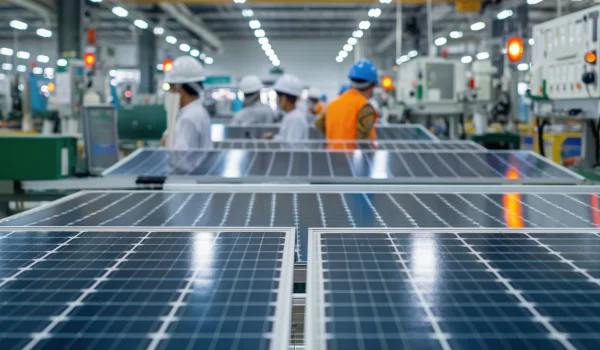
The following is an editorial industry list based on factors such as installed renewable capacity, solar project presence, manufacturing scale, project pipeline, technology capabilities and overall contribution to India's solar ecosystem. It is not an official government ranking.
Adani Green Energy Limited
Adani Green Energy is one of India's largest renewable energy companies and a major player in utility-scale solar power generation.
The company has developed large renewable energy projects across India, with the Khavda renewable energy park in Gujarat being particularly significant. Its portfolio includes solar, wind and hybrid renewable projects.
During FY 2025–26, Adani Green Energy added more than 5 GW of renewable energy capacity, including more than 3.4 GW of solar capacity. Its operational renewable portfolio reached approximately 19.3 GW at the end of FY 2025–26.
By mid-2026, the company's operational renewable capacity had crossed 20 GW.
Its major areas include:
- Utility-scale solar power
- Solar-wind hybrid projects
- Wind energy
- Battery energy storage
- Large renewable energy parks
- Renewable power generation
Adani Green Energy is particularly important for India's large-scale renewable infrastructure development.
Tata Power Renewable Energy
Tata Power is one of India's most recognised integrated power companies and has a substantial presence in renewable energy through Tata Power Renewable Energy.
The company is involved in utility-scale solar projects, rooftop solar, solar EPC and other clean-energy solutions.
Its solar business covers multiple segments, including:
- Utility-scale solar projects
- Rooftop solar
- Commercial and industrial solar
- Solar EPC
- Solar manufacturing
- Solar pumps
- Electric mobility-related clean-energy solutions
Tata Power's integrated business model gives it exposure to both electricity generation and downstream solar solutions.
The company is also active in expanding solar access for residential and commercial customers.
NTPC Green Energy
NTPC Green Energy is the renewable-energy-focused arm of India's largest power generation utility, NTPC.
The company is developing large renewable energy projects across India, with solar power forming an important part of its portfolio.
NTPC has access to extensive power-sector expertise, land-development capabilities, transmission knowledge and relationships with government and institutional customers.
Its renewable strategy includes:
- Solar power
- Wind power
- Hybrid renewable projects
- Green hydrogen
- Energy storage
- Renewable energy parks
NTPC Green Energy is expected to remain an important participant as India expands its renewable generation capacity.
ReNew
ReNew is one of India's leading renewable energy companies and has developed a large portfolio of clean-energy assets.
The company operates across solar, wind, hybrid renewable energy and emerging clean-energy areas.
Solar power represents a significant part of its renewable portfolio.
ReNew's business includes:
- Solar power generation
- Wind power
- Hybrid renewable projects
- Renewable energy storage
- Green hydrogen-related initiatives
- Utility-scale clean-energy infrastructure
The company has played an important role in India's independent renewable power producer market.
JSW Energy
JSW Energy is another major Indian power company that has been increasing its renewable energy portfolio.
The company operates across renewable and conventional power generation, with solar and wind becoming increasingly important components of its growth strategy.
Its renewable business includes:
- Solar power
- Wind power
- Hybrid renewable energy
- Energy storage
- Pumped hydro storage
JSW Energy's combination of solar, wind and storage is particularly relevant as India's electricity system moves toward higher renewable penetration.
Waaree Energies
Waaree Energies is one of India's leading solar manufacturing companies and has expanded beyond module manufacturing into a broader clean-energy business.
The company has a major presence in solar photovoltaic module manufacturing and is also developing capabilities across cells, inverters, solar project development and other clean-energy technologies.
In late 2025, Waaree's total solar module manufacturing capacity in India, including its Indosolar capacity, was reported at more than 20 GW under the approved manufacturing framework.
Its business areas include:
- Solar PV modules
- Solar cells
- Solar project development
- Engineering and EPC
- Solar inverters
- Battery storage
- Clean-energy equipment
Waaree is particularly important when discussing India's domestic solar manufacturing industry.
Vikram Solar
Vikram Solar is an established Indian solar module manufacturer and renewable energy solutions company.
The company manufactures photovoltaic modules and has been involved in solar project development and engineering services.
Its activities include:
- Solar PV module manufacturing
- Solar EPC
- Solar project development
- Utility-scale solar
- Commercial and industrial solar
Vikram Solar is one of the established Indian names in the domestic photovoltaic manufacturing sector.
Premier Energies
Premier Energies has become an important participant in India's solar manufacturing ecosystem.
The company manufactures solar cells and modules and is expanding its production capabilities to meet rising domestic demand.
Its operations cover:
- Solar cells
- Solar modules
- Integrated solar manufacturing
- Renewable energy equipment
The growth of companies such as Premier Energies reflects India's broader push toward domestic solar manufacturing and reduced dependence on imported components.
Sterling and Wilson Renewable Energy
Sterling and Wilson Renewable Energy is an important Indian solar engineering and project execution company.
Unlike companies focused primarily on owning solar power assets, its strength lies largely in engineering, procurement and construction services.
The company has worked on utility-scale solar projects in India and international markets.
Its capabilities include:
- Solar EPC
- Utility-scale solar projects
- Project engineering
- Construction
- Operations and maintenance
The company is relevant to India's solar sector because large solar farms require specialised engineering and construction expertise.
KPI Green Energy
KPI Green Energy is an Indian renewable energy company with a strong focus on solar power generation and renewable energy projects.
The company operates through its solar power project development and generation businesses and has also expanded into hybrid and other renewable projects.
Its activities include:
- Solar power generation
- Captive solar projects
- Independent power projects
- Renewable energy parks
- Hybrid renewable projects
KPI Green Energy is particularly relevant in India's commercial, industrial and captive renewable energy market.
Other Important Solar Companies in India
India's solar ecosystem is much larger than the companies listed above. Several other businesses contribute to solar generation, manufacturing, EPC and technology.
Important names include:
- Azure Power
- SJVN
- NHPC
- Hero Future Energies
- O2 Power
- Avaada Energy
- ACME Solar
- Vikram Solar
- Emmvee
- RenewSys
- Goldi Solar
- Rayzon Solar
- Insolation Energy
- Waaree Renewable Technologies
- Solex Energy
Their roles differ significantly. Some focus on solar generation, while others specialise in modules, cells, EPC services, rooftop solar or project development.
Major Types of Solar Companies in India
The phrase "solar company" can refer to several different types of businesses.
Solar Power Generation Companies
These companies develop, own or operate solar power plants and sell electricity to utilities, businesses or other customers.
Examples include:
- Adani Green Energy
- Tata Power Renewable Energy
- NTPC Green Energy
- ReNew
- JSW Energy
- KPI Green Energy
- Azure Power
Solar Module Manufacturers
These companies manufacture photovoltaic modules used in solar power systems.
Examples include:
- Waaree Energies
- Vikram Solar
- Premier Energies
- Emmvee
- Goldi Solar
- RenewSys
- Rayzon Solar
Solar Cell Manufacturers
Solar cells are the basic electricity-generating components inside photovoltaic modules.
Indian companies are increasingly investing in domestic cell manufacturing as the country attempts to develop a more integrated solar supply chain.
Solar EPC Companies
Engineering, procurement and construction companies design and build solar power plants.
They may handle:
- Site development
- Engineering
- Equipment procurement
- Installation
- Electrical systems
- Grid connection
- Testing
- Project commissioning
Rooftop Solar Companies
Rooftop solar companies install photovoltaic systems on:
- Houses
- Offices
- Factories
- Warehouses
- Schools
- Commercial buildings
- Institutions
This segment is becoming increasingly important as distributed solar generation expands.
India's Solar Power Capacity
India's solar sector has expanded dramatically over the past decade.
As of July 2026, India's cumulative installed solar capacity was approximately 164.6 GW.
The installed capacity included approximately:
- 122.6 GW of ground-mounted solar
- 30.7 GW of grid-connected rooftop solar
- 4.8 GW of the solar component of hybrid projects
- 6.5 GW of off-grid solar
These figures demonstrate that India's solar industry is no longer limited to large solar parks. Rooftop and distributed solar are also becoming important parts of the electricity system.
Why Is Solar Power Growing in India?
Several factors are driving solar power growth.
Falling Solar Technology Costs
The cost of solar modules and associated equipment has declined significantly over the long term, improving the economics of solar projects.
Government Renewable Energy Targets
India has established ambitious renewable energy and non-fossil electricity goals, encouraging investment in solar and other clean-energy technologies.
Rising Electricity Demand
India's growing economy requires additional electricity generation. Solar power provides one option for meeting this demand while reducing dependence on fossil fuels.
Corporate Renewable Energy Demand
Large companies are increasingly looking for renewable electricity through captive projects, open-access arrangements and power purchase agreements.
Rooftop Solar Adoption
Residential and commercial consumers are increasingly installing rooftop solar systems to reduce electricity costs and increase the use of renewable power.
Solar Manufacturing in India
Solar manufacturing has become a strategic area for the Indian renewable energy industry.
For many years, Indian solar developers relied significantly on imported solar cells and modules. India is now attempting to develop a stronger domestic manufacturing chain.
The manufacturing ecosystem includes:
- Polysilicon
- Ingots
- Wafers
- Solar cells
- Solar modules
- Inverters
- Mounting structures
- Energy storage systems
Companies such as Waaree Energies, Premier Energies, Vikram Solar and other manufacturers are investing in additional production capacity.
The expansion is supported by government initiatives designed to encourage domestic manufacturing.
Challenges Facing Solar Power Companies in India
Despite strong growth, the industry faces several challenges.
Manufacturing Oversupply
India's solar module manufacturing capacity has expanded very rapidly. Recent industry estimates indicate that manufacturing capacity is growing faster than actual domestic demand, resulting in low utilisation at some facilities.
This could increase competition and encourage consolidation among manufacturers.
Import Dependence
India has expanded domestic manufacturing, but the upstream supply chain remains less developed than module manufacturing.
Some manufacturers continue to depend on imported raw materials and components.
Land Requirements
Large solar parks require substantial areas of land. Land acquisition, environmental considerations and local community issues can affect project development.
Grid Connectivity
Solar generation is variable because electricity production depends on sunlight. Transmission infrastructure and energy storage are therefore becoming increasingly important.
Financing
Large solar projects require significant upfront capital. Interest rates, financing availability and power-purchase arrangements can affect project economics.
Solar Power and Energy Storage
Energy storage is becoming increasingly important as India's solar capacity grows.
Solar plants produce most of their electricity during daylight hours, while electricity demand can continue into the evening.
Battery energy storage systems can help address this mismatch.
Companies are therefore increasingly combining:
- Solar
- Wind
- Battery storage
- Pumped hydro
- Hybrid renewable projects
This approach can provide more consistent electricity and improve grid flexibility.
Future of Solar Power Companies in India
India's solar industry is expected to remain a major growth area during the coming years.
The next phase of development is likely to focus not only on installing more solar panels but also on building a complete domestic clean-energy ecosystem.
Key growth areas may include:
- Utility-scale solar farms
- Rooftop solar
- Solar manufacturing
- Solar cells and wafers
- Battery storage
- Solar-wind hybrid projects
- Green hydrogen
- Solar-powered industrial facilities
- Commercial and industrial solar
- Export-oriented solar manufacturing
Companies with integrated manufacturing, project development, storage and technology capabilities may be better positioned as the industry matures.
How to Choose a Solar Company
For customers or businesses considering solar installation, company selection should not be based only on brand recognition.
Important factors include:
- Product quality
- Solar module efficiency
- Warranty terms
- Installation experience
- EPC capabilities
- After-sales service
- Project track record
- Inverter quality
- Maintenance support
- Financing options
- Applicable government schemes
- Total system cost
For large commercial or industrial projects, additional factors such as engineering capabilities, financial strength, project execution history and long-term operations support should also be considered.
Frequently Asked Questions
Which is the largest solar power company in India?
Adani Green Energy is one of India's largest renewable power companies and has one of the country's largest operational solar portfolios. Its overall renewable portfolio includes solar, wind and hybrid projects.
Which is the largest solar panel company in India?
Waaree Energies is among India's largest solar module manufacturers, with more than 20 GW of manufacturing capacity in India reported under the applicable approved manufacturing framework by late 2025.
Which companies generate solar power in India?
Major solar power generation companies include Adani Green Energy, Tata Power Renewable Energy, NTPC Green Energy, ReNew, JSW Energy, KPI Green Energy and several other independent renewable power producers.
Which companies manufacture solar panels in India?
Important Indian solar module manufacturers include Waaree Energies, Vikram Solar, Premier Energies, Emmvee, Goldi Solar, RenewSys and other domestic manufacturers.
Is solar power profitable in India?
Solar projects can be commercially attractive depending on project size, electricity tariffs, financing costs, equipment prices, land costs, generation levels and the applicable power-purchase arrangement. Profitability differs from project to project.
Is rooftop solar growing in India?
Yes. Rooftop solar is becoming an increasingly important part of India's solar sector. India's grid-connected rooftop solar capacity was approximately 30.7 GW by July 2026.
What is the future of solar energy in India?
The long-term outlook remains strong because India needs additional electricity generation while pursuing greater renewable energy adoption. Solar is expected to remain one of the country's most important renewable energy sources.
Conclusion
The solar power companies in India market has evolved from a relatively small renewable-energy segment into a major part of the country's electricity industry.
Companies such as Adani Green Energy, Tata Power Renewable Energy, NTPC Green Energy, ReNew and JSW Energy are important in solar power generation and large-scale renewable projects. At the manufacturing end, Waaree Energies, Vikram Solar and Premier Energies are among the major names helping expand India's domestic solar supply chain.
With India's installed solar capacity reaching approximately 164.6 GW by July 2026, the industry's next stage will involve more than simply adding solar generation. Manufacturing, rooftop installations, energy storage, grid infrastructure, hybrid renewable projects and advanced solar technologies are likely to become increasingly important.
For businesses, investors, consumers and policymakers, India's solar sector therefore represents one of the country's most significant long-term clean-energy opportunities.